
Alicante essentials Vol. III – Beneath your feet: the oldest Alicante
Oldest Alicante: archaeological remains beneath the city
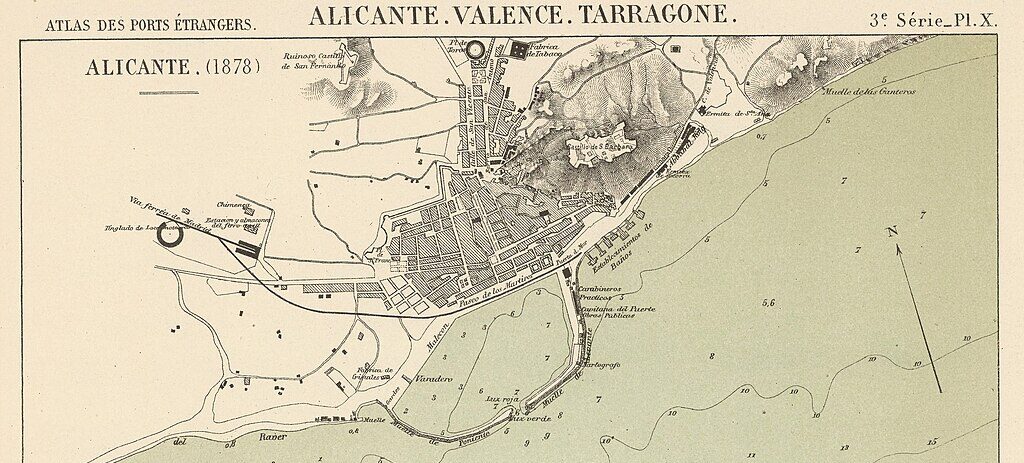
Alicante is lived facing the sea… but also by walking over centuries of history. Beneath streets we stroll through today without much thought lie Iberian, Roman, medieval and contemporary remains that explain why this city has always been a strategic, inhabited and contested place.
In fact, in this third volume of Must-see Alicante, we invite you on a chronological —and very walkable— journey through the oldest Alicante, the one that is not always visible, but is right there, just beneath your feet.
Roman remains in Alicante: Lucentum
Tossal de Manises (La Albufereta)
Before the Alicante we know today existed, there was Lucentum, the Roman city founded on a previous Iberian settlement. Located where the Tossal de Manises now stands, it was a key enclave for controlling territory and maritime trade.
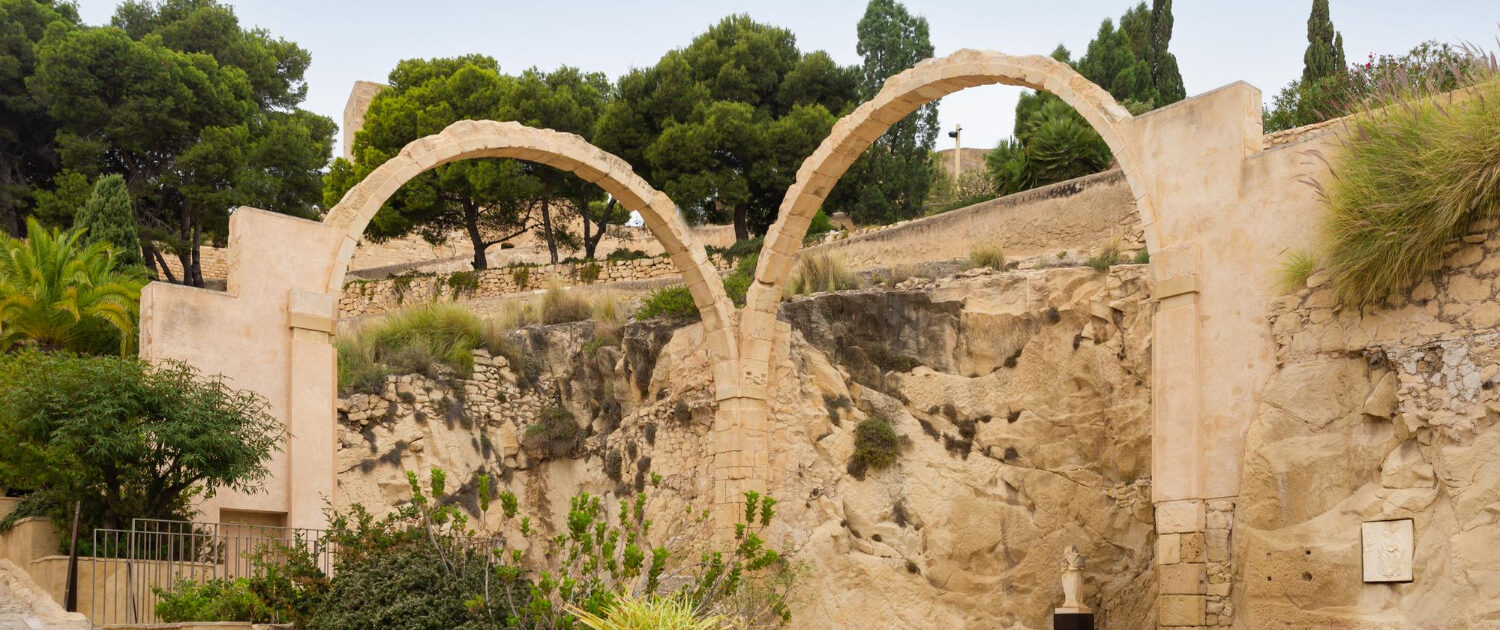
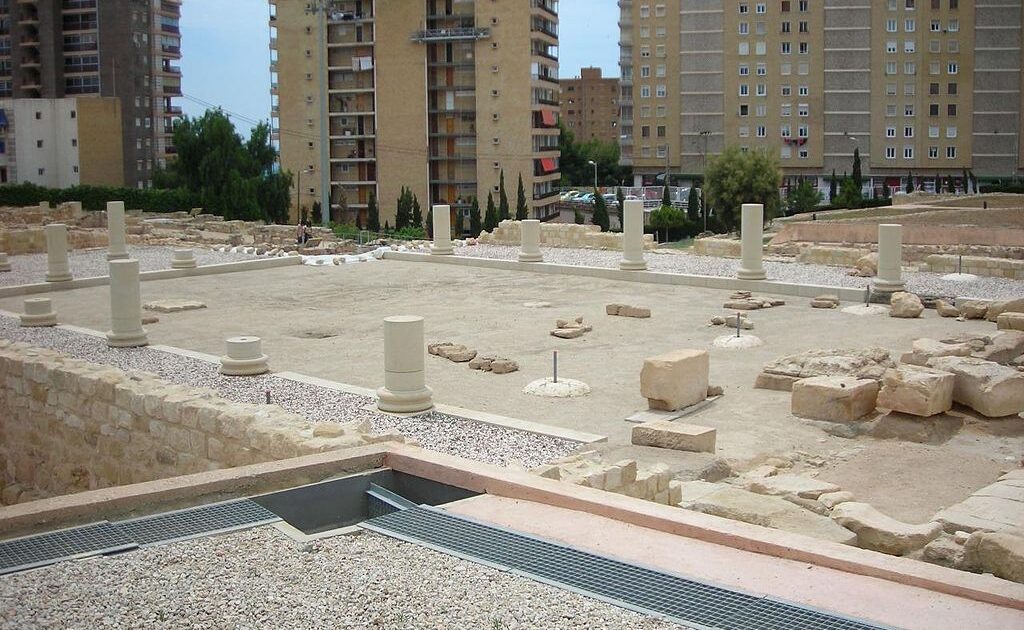
Roman remains of Lucentum at the Tossal de Manises, AlicanteWhat’s more, what is remarkable is not only that streets, baths, forum and houses are still preserved, but that its urban layout follows the same principles as many modern cities: orderly blocks, public spaces and a surprisingly advanced sewer system for its time.
Walking through Lucentum is understanding that Alicante was not born by chance: it was planned.
Benacantil: the inhabited mountain
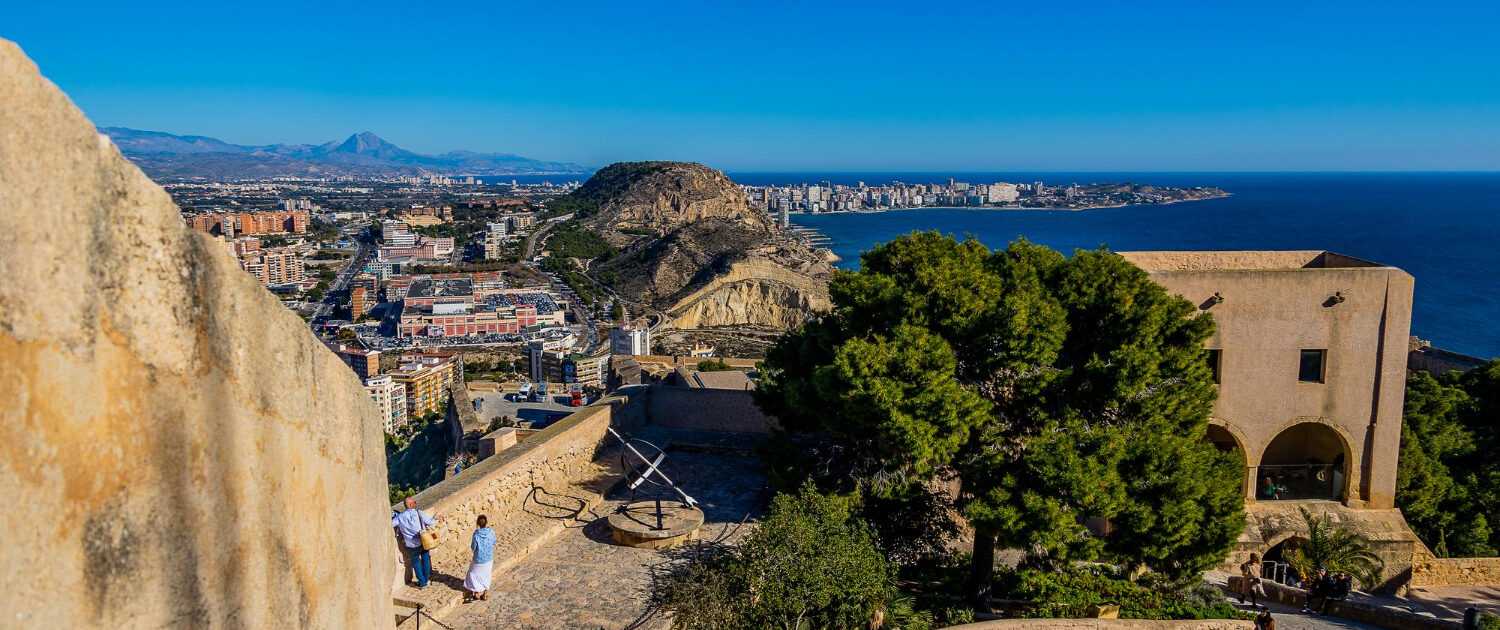
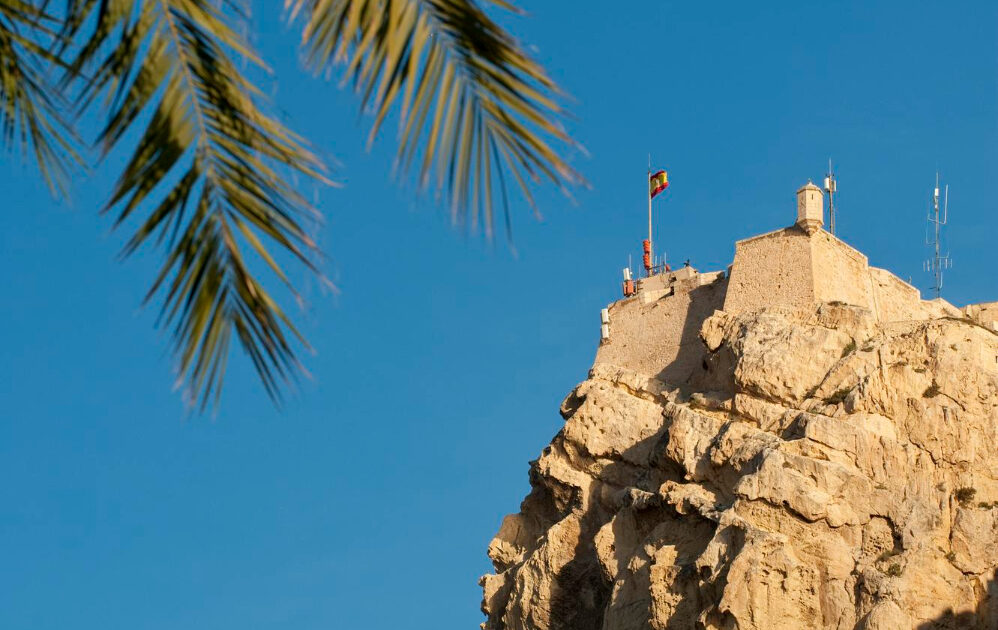
Santa Bárbara Castle and surroundings
Mount Benacantil is not just a postcard view. From Iberian times through the Middle Ages, it was continuously inhabited. Beneath the castle and along its slopes, remains of dwellings, walls and defensive structures from different periods have been documented.
Still, a lesser-known detail: the castle is not a single construction, but a superimposition of historical layers. Each civilisation adapted what already existed, reusing walls and spaces. It is, quite literally, a vertical summary of the city’s history.
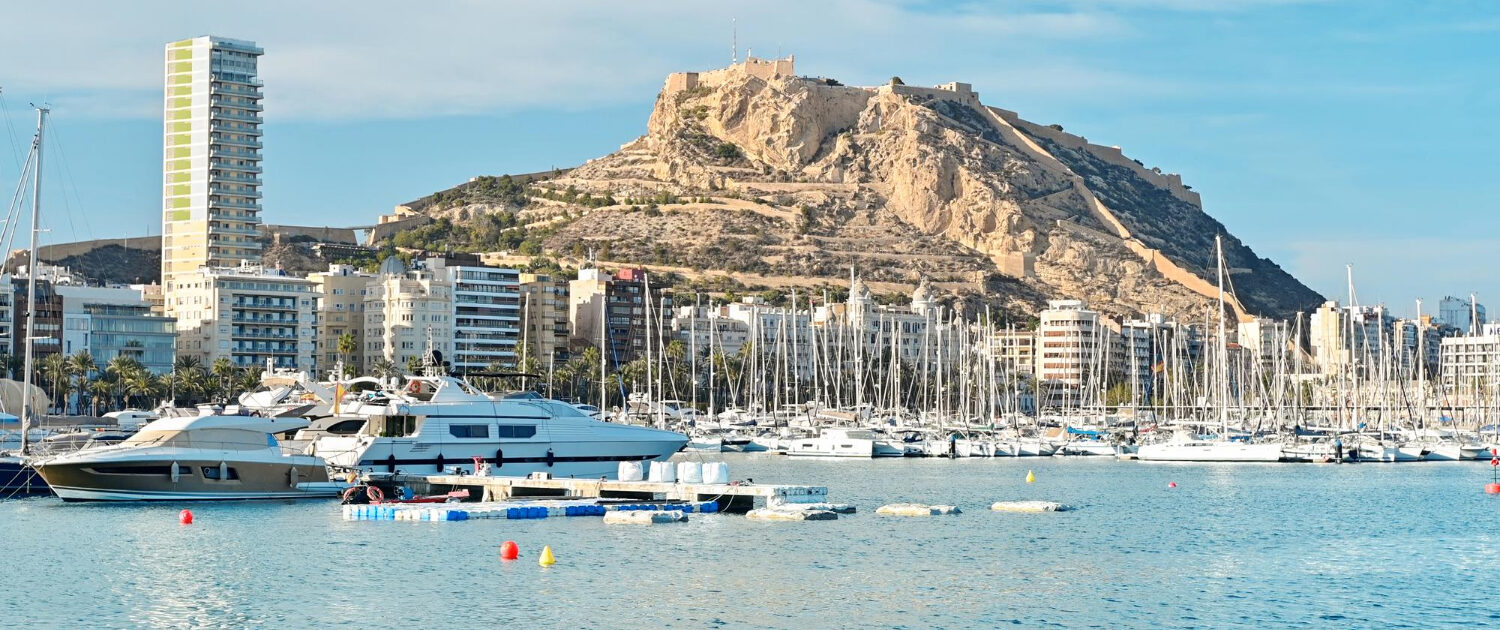
Santa Bárbara Castle on Mount BenacantilThe Islamic city of Al-Laqant
El Barrio de Santa Cruz and El Barrio
When Alicante was Al-Laqant, between the 8th and 13th centuries, the city was organised as a walled medina set between Mount Benacantil and the sea. This historic core is what we now know as El Barrio, the true urban heart of the medieval city. Political, religious and commercial life was concentrated here, and its irregular layout responded to both defence and climate: narrow streets, winding routes and spaces designed for shade and everyday life.
Over time, the city began to grow up the slopes of Mount Benacantil. This is how the Barrio de Santa Cruz was born, a more humble and popular residential expansion built in the Christian period. Unlike El Barrio, Santa Cruz was not a centre of power, but a lived-in neighbourhood: small houses, steep streets, stairways instead of pavements and a direct, unembellished adaptation to the mountain.
Today, they are walked almost as a single space, but their origins are different. El Barrio was the city; Santa Cruz was one of the places where that city overflowed and became everyday life. What they share is a way of understanding urbanism that has survived for centuries: organic growth, respect for the terrain and a human scale that is still felt when walking without haste.
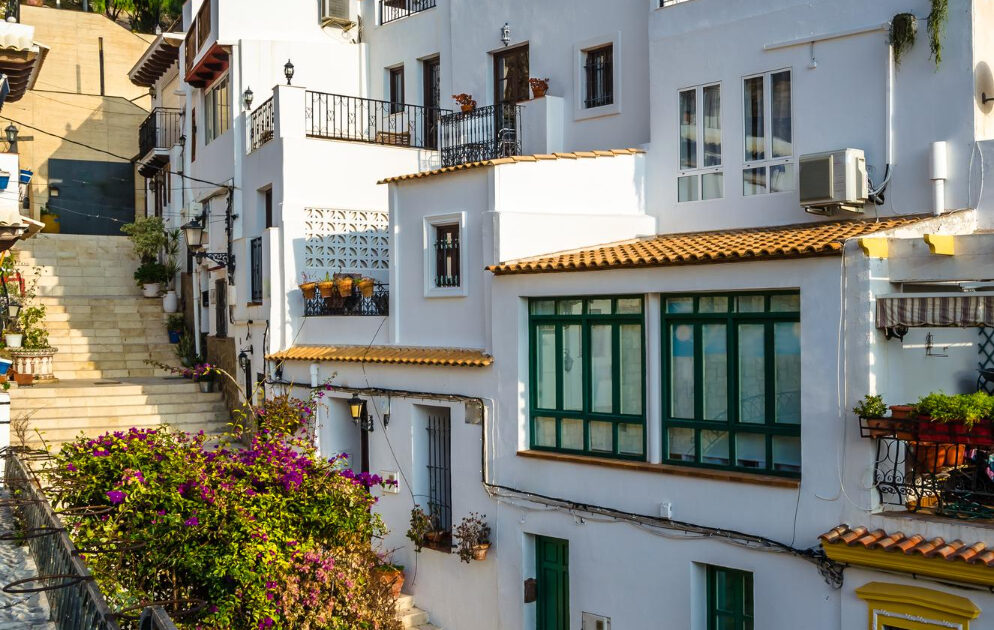
Streets of the Santa Cruz neighbourhood in Alicante’s old town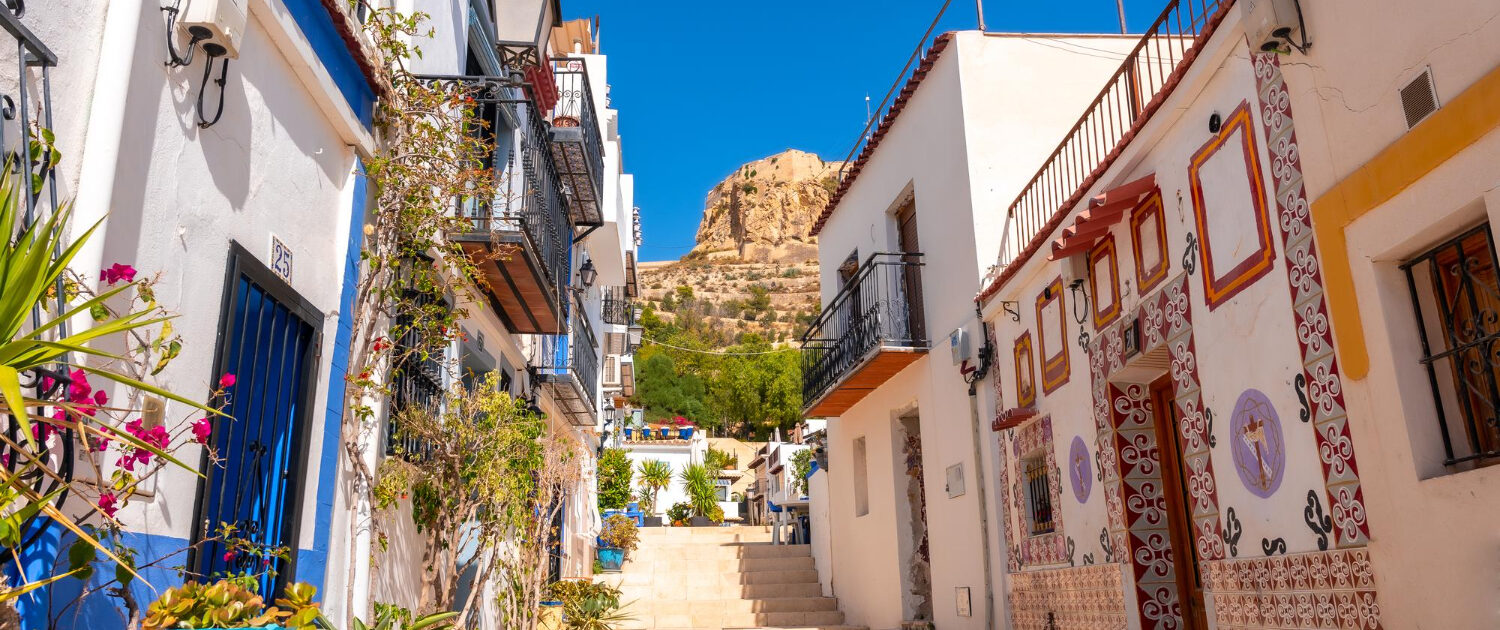
Streets of the Santa Cruz neighbourhood in Alicante’s old townIn other words, here archaeology is not displayed in showcases. It is in the width of the streets, in the unexpected slopes, in the orientation of the façades and in the way the city protects itself from the sun. A medieval design that, far from becoming obsolete, still works surprisingly well in present-day Alicante.
The Town Hall and the Baroque city
Town Hall Square and Casa de la Asegurada
In particular, beneath Alicante’s current Town Hall lie not only construction remains, but a true synthesis of the city’s urban evolution. In this spot, sections of the medieval wall have been documented, as well as structures predating the current Baroque building, confirming that this area was strategic for centuries. It is no coincidence: this is where administrative and defensive power was concentrated when the port was Alicante’s true economic engine.
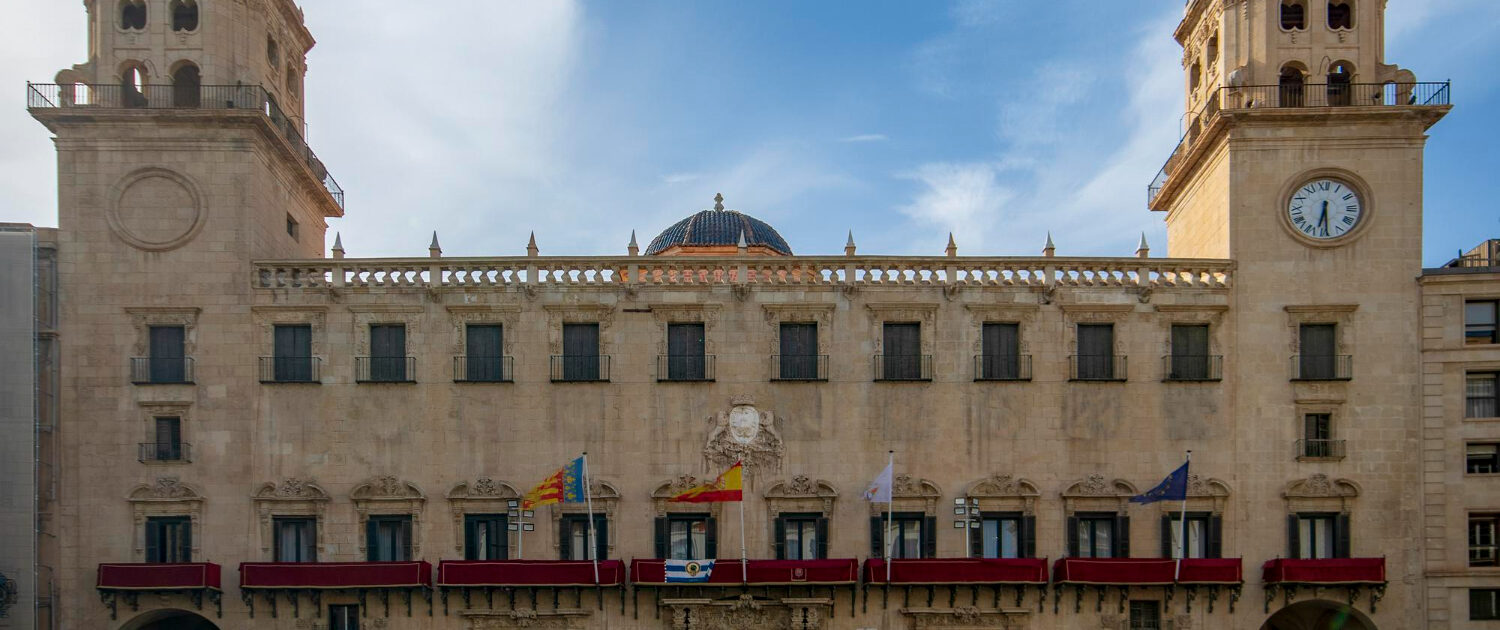
Just as importantly, a few metres away stands the Casa de la Asegurada, one of the oldest preserved civil buildings in the city. Its construction reused earlier defensive elements, something very common at a time when adapting existing structures was more practical than demolishing and rebuilding. This overlap of functions —defence, administration and urban life— explains why this area has been occupied almost continuously since the Middle Ages.
On top of that, here appears one of Alicante’s most curious and lesser-known details: the so-called “zero level”. On the Town Hall staircase lies the reference point that was used for decades to measure altitude above sea level in Spain. From this point, maps, infrastructure and engineering projects across the country were established. A technical gesture, seemingly discreet, that connects Alicante with the history of cartography, engineering and modern construction.
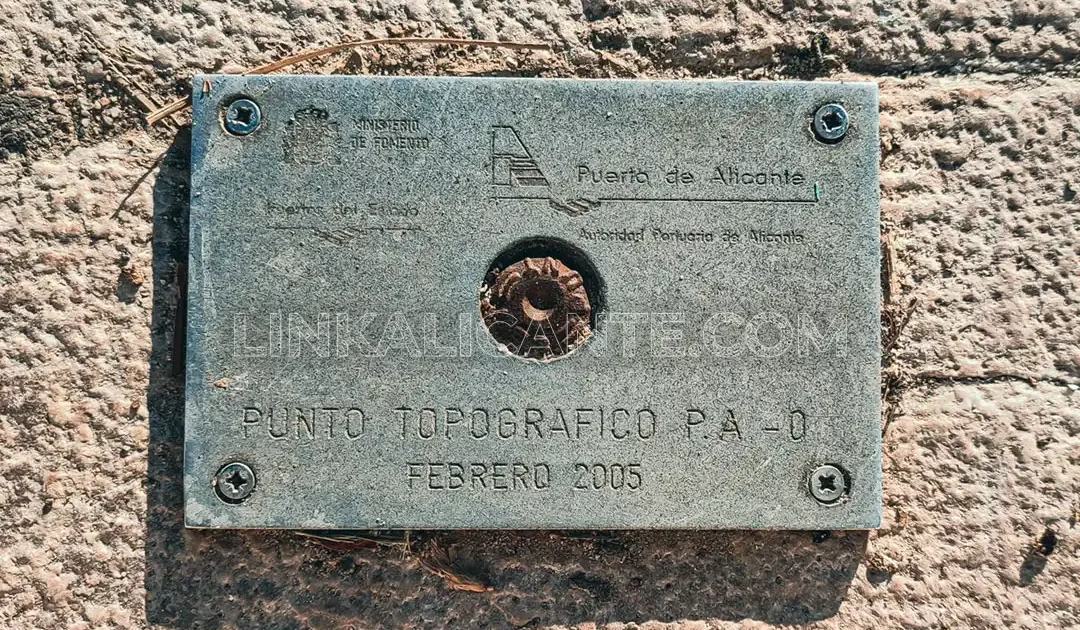
Ultimately, walking across this square is walking over layers of city: invisible walls, reused buildings and a small brass point that, barely noticeable, marked for years the way an entire country was measured.
Air-raid shelters in Alicante during the Civil War
Why these shelters matter
However, not all archaeology is ancient in the classical sense. Beneath the Central Market and other areas of the city centre lie air-raid shelters built during the Spanish Civil War.
For this reason, these underground spaces recall one of the harshest episodes of Alicante’s recent history, a city especially affected by bombardments. Today, some shelters can be visited and offer a sober yet necessary experience to understand the 20th-century past.
Four shelters to find in the city centre
· Central Market Shelter
It is the most well-known and symbolic. Built to protect the civilian population, it is closely linked to the bombing of 25 May 1938, one of the deadliest of the Civil War in an open city.
As a result, today it is preserved as a visitable space and allows visitors to understand how life was organised underground: continuous benches, ventilation, interior signage and rules of coexistence in extreme situations.
· Plaza Séneca Shelter
Meanwhile, this shelter stands out for its excellent state of preservation and for offering a very educational experience. It was designed to accommodate hundreds of people and retains original elements that help imagine the waiting, the silence and the tension of those moments.
In fact, it is one of the shelters that best explains the everyday dimension of the war in Alicante.
· Plaza Doctor Balmis Shelter
Likewise, located in what is now a very busy area, this shelter shows just how much the entire city had to adapt to the constant threat of bombardment. It formed part of a broad and well-planned civil protection network.
In this context, its location helps to understand how shelters were integrated into daily urban life.
· Plaza del Músico Óscar Tordera Shelter (former Market Square)
Finally, less well-known, but equally representative, this shelter is part of the extensive underground network built in Alicante during the war. Many of these spaces remain closed, but their documented existence reveals the scale of the city’s defensive effort.
A city built upon itself
In short, Alicante does not destroy its past: it integrates it. Iberians, Romans, Muslims, medieval communities and the contemporary city have built layer upon layer, adapting what already existed to new needs.
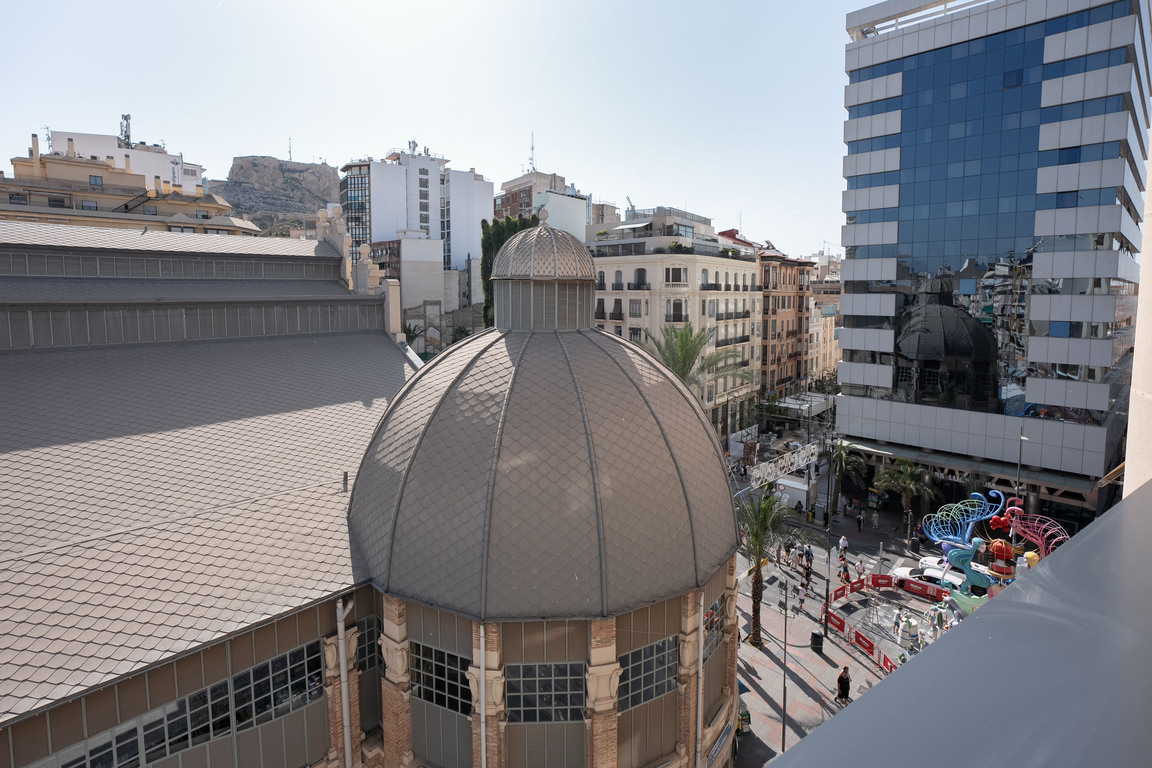
That is why walking through the city attentively changes the way you see it. Every square, every unexpected slope, every ancient wall speaks of a city that never stopped reinventing itself.
In practice, if you stay in the centre, this entire route can be done on foot, unhurriedly, letting yourself be surprised. And perhaps that is the greatest luxury: sleeping in a modern city knowing that, just beneath it, a millenary history rests.
In the end, Alicante is discovered by looking around… and also by looking down.
And of course, this journey does not end here. In the next volume of Must-see Alicante, we will head indoors with Vol. IV – Museums that tell the story of Alicante, a tour of spaces where art, history and curiosities help us understand the city from new perspectives, with calm and attention to detail.
If so, if this journey through the oldest Alicante sparks your curiosity, experiencing it from within makes all the difference. Staying in the city centre allows you to explore these layers of history on foot, without schedules or rush, returning to a calm and carefully designed space when the city slows down.
At the same time, at Manlia, every stay is designed to enjoy Alicante with freedom, attention to detail and the confidence of a well-accompanied experience. If you are planning your next getaway, booking directly on our website is the easiest way to start living it.


